A hydraulic failure can stop a truck long before the engine quits. A dump body that will not raise, a mixer drum that loses speed, or a lift axle that will not respond can turn a scheduled load into expensive downtime. Hydraulic system service for trucks is about finding the actual cause of lost function quickly, making the right repair, and preventing the same truck from returning to service with a hidden problem still in the circuit.
For Houston-area fleets, contractors, and owner-operators, the priority is not simply getting fluid back in the reservoir. The priority is restoring safe, dependable operation without losing more time to repeat failures, missed deliveries, or an unnecessary tow.
What Hydraulic System Service for Trucks Should Address
Truck hydraulic systems convert engine or PTO power into working force. Depending on the application, that force may operate a dump bed, concrete mixer drum, crane, lift axle, roll-off system, liftgate, trailer equipment, steering component, or auxiliary attachment. While the equipment changes, the system relies on the same basic parts working together: fluid, reservoir, pump, filters, hoses, fittings, control valves, cylinders, motors, and pressure relief components.
When one part fails, the symptom can point in the wrong direction. A slow cylinder may look like a weak pump, but the restriction could be a plugged filter, collapsed suction hose, leaking valve, worn cylinder seal, or fluid that is too aerated to build stable pressure. Replacing parts without testing the system can add cost and leave the original fault in place.
Professional service starts with the complaint and the operating conditions. Does the problem occur only when the oil is hot? Does the body lift normally when empty but stall under load? Is the PTO engaging correctly? Has the system recently had a hose replacement, fluid loss, or contamination event? Those details help narrow the diagnosis before repairs begin.
Leaks Are More Than a Housekeeping Issue
An external hydraulic leak is often the most visible warning sign, but it should not be treated as a simple top-off situation. A damaged hose, loose fitting, worn seal, cracked hard line, or cylinder leak can lower fluid level and introduce air into the circuit. The result may be jerky operation, excessive pump noise, overheating, weak movement, and accelerated component wear.
Leak repairs need to account for why the leak occurred. A hose rubbing against a frame rail will fail again if it is replaced without correcting the routing or adding proper protection. A fitting that repeatedly loosens may indicate vibration, improper assembly, damaged threads, or pressure spikes. On a work truck, the repair has to hold up under real operating conditions, not just pass a quick function test.
Pressure, Flow, and Heat Tell the Real Story
Hydraulic systems need the right pressure and flow to do their work. Pressure creates force. Flow controls speed. Heat is often the warning that either one is being lost through restriction, internal leakage, or excessive bypassing.
A truck may have enough pressure to move an empty dump bed but not enough usable flow to operate at normal speed. A hydraulic motor may run until the oil gets hot, then lose power as internal wear increases leakage. A relief valve set incorrectly can protect nothing or cause an otherwise healthy pump to work against excessive pressure.
Accurate diagnosis may include checking fluid condition, inspecting filters and suction lines, verifying PTO operation, testing pressure at the appropriate points, and observing the system under load. The right test depends on the equipment. A concrete mixer hydraulic drive, for example, has different operating demands than a simple dump-body hoist circuit.
Common Signs Your Truck Needs Hydraulic Attention
Hydraulic problems rarely begin as a complete shutdown. Many start with a small change in performance that gets easier to ignore during a busy week. Paying attention early can prevent a failed pump, damaged motor, or lost jobsite day.
Watch for slow or uneven equipment movement, a body or attachment that drifts down, hydraulic oil around hoses or cylinders, whining or cavitation noise from the pump, foamy fluid in the reservoir, repeated overheating, or an attachment that loses power under load. Burnt-smelling oil, dark fluid, and metal debris are also serious signs. They can indicate heat damage or component wear already circulating through the system.
Do not assume low fluid is the only issue when a system stops working. If the reservoir was low, the next question is where the fluid went and whether air or contamination entered the system. Refilling without locating the cause can allow the failure to progress.
Why Clean Hydraulic Fluid Matters on Heavy-Duty Trucks
Hydraulic fluid is both the power-transfer medium and a lubricant for internal components. Dirt, water, incorrect fluid, and metal particles can damage tight-clearance parts inside pumps, motors, and control valves. Once contamination moves through the circuit, a single failed component can become a larger system repair.
Filters are not optional maintenance items. They protect expensive components, but they also need to be serviced at the right interval and inspected when a failure occurs. A filter that is clogged, bypassed, or installed incorrectly cannot protect the system. Likewise, a new pump installed in contaminated oil can fail quickly.
Fluid service should match the manufacturer’s specifications and the truck’s working environment. Trucks that spend long hours on hot jobsites, run high-cycle equipment, or work in dusty construction conditions may need more frequent inspection than a vehicle with lighter use. Service intervals are not one-size-fits-all. Duty cycle, equipment type, ambient heat, load, and the history of the hydraulic system all matter.
Mobile Hydraulic Repair Keeps the Asset Where It Works
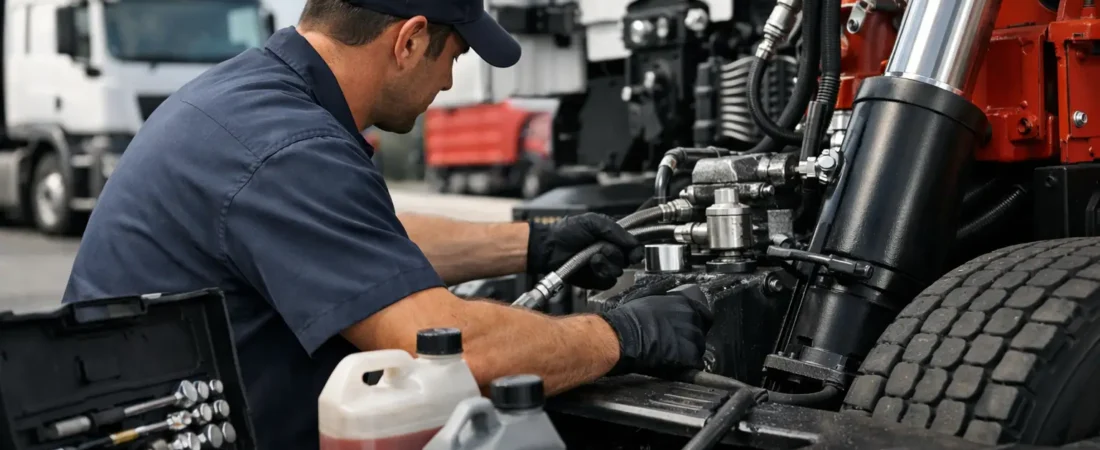
When a disabled truck is parked at a jobsite, batch plant, yard, roadside, or customer location, getting it to a shop may require a tow, a replacement unit, and a missed assignment. Mobile service can reduce that disruption by bringing diagnostics and repairs to the truck.
AP Diesel Diagnostics provides on-site hydraulic troubleshooting and repair for heavy-duty trucks and specialized equipment systems, including mixer-truck applications. Field service is especially valuable when the issue involves a hose failure, fitting, PTO concern, electrical control issue, valve problem, or a hydraulic function that needs to be tested where the truck operates.
Not every repair should be completed in the field. Major internal pump or motor failures, extensive contamination, or repairs requiring specialized machining may call for component replacement, deeper system cleaning, or controlled shop work. A dependable diagnosis identifies that early, so the operator can make the right operational decision instead of spending time on a temporary fix.
Preventing Repeat Hydraulic Failures
Preventive service is less disruptive than waiting for a truck to lose a critical function under load. During regular inspections, look beyond the fluid level. Check hose routing, abrasion points, clamps, fittings, cylinder rods, reservoir breathers, filter condition, PTO engagement, and signs of heat around pumps or valves.
Operators also play an important role. A driver who reports a new whining noise, slower hoist speed, or a small leak gives the maintenance team a chance to act before the system fails. Clear reporting should include when the problem occurs, whether the equipment is loaded, whether it changes as the truck warms up, and any recent service or impact damage.
For mixer trucks and other revenue-producing equipment, maintenance timing should reflect the work schedule. Inspecting hydraulic systems before high-demand production periods helps avoid taking a truck out of rotation when it is needed most. The cost of a planned service visit is usually easier to manage than a failed delivery, a delayed pour, or a truck sitting at the edge of a jobsite.
Safe Service Requires More Than Replacing a Hose
Hydraulic oil under pressure can cause severe injury. A pinhole leak can inject fluid through skin, and raised equipment can fall if it is not properly supported. Before inspection or repair, the system must be shut down, pressure relieved according to the equipment procedure, and any elevated body or attachment secured with the correct mechanical support.
Never check a suspected high-pressure leak with your hand. Use proper inspection practices, wear appropriate protective equipment, and treat hydraulic components as pressurized until they have been safely isolated. After repairs, the system should be checked for leaks, correct operation, and safe response under working conditions.
A truck’s hydraulic equipment is part of its ability to earn. When the first signs of trouble appear, address them while the repair is still controlled, scheduled, and focused on keeping the next load or job moving.