A loaded truck parked on the shoulder with a flashing DPF warning is not a minor maintenance issue. It can turn into a derate, a no-start condition, a missed delivery, or an expensive tow. DPF regeneration service Houston operators need should begin with identifying why the filter is loaded, not simply forcing a regen and hoping the warning stays off.
For fleets, owner-operators, concrete suppliers, and construction contractors, the goal is clear: restore normal operation safely and prevent the same emissions fault from taking the truck out of service again. A proper response considers the diesel particulate filter, the sensors reporting its condition, the engine’s ability to make clean exhaust, and the operating pattern that may be preventing normal regeneration.
What a DPF Regeneration Problem Looks Like in the Field
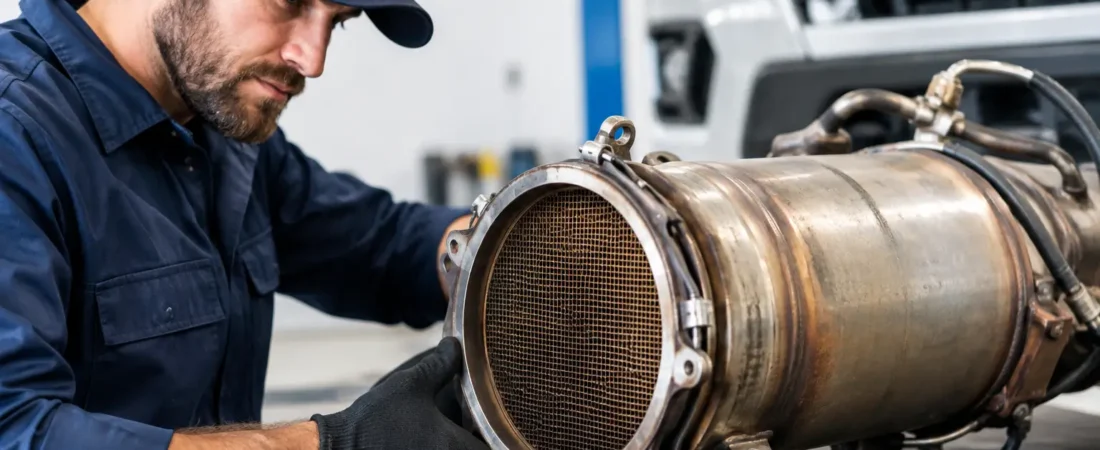
The DPF captures soot produced during diesel combustion. Under normal conditions, the truck manages soot through passive and active regeneration. During a regen, exhaust temperature rises enough to burn accumulated soot into ash. Ash remains in the filter over time and eventually requires professional cleaning or replacement, but soot should be regularly managed by the vehicle’s regeneration process.
Trouble starts when the truck cannot complete that process. Drivers may see a DPF lamp, check engine light, high-exhaust-temperature warning, or a message instructing them to continue driving for regeneration. If the condition progresses, the engine control module may reduce available power and speed. That protection strategy is designed to prevent damage, but it can leave a truck unable to pull a load, reach a jobsite, or keep a delivery schedule.
Mixer trucks and vocational equipment are especially vulnerable because their duty cycles may not provide the steady road speed and exhaust heat needed for passive regeneration. Extended idling, stop-and-go work, short runs, PTO operation, and frequent shutdowns can all interrupt the conditions a DPF needs to clean itself.
Why a Forced Regen Is Not Always the Answer
A parked or forced regeneration can be the right repair when the system is functional and soot loading is within an allowable range. It raises exhaust temperature under controlled conditions to clear soot that the truck could not burn off during normal operation. However, it is a repair procedure, not a universal reset button.
If there is an active fault for an exhaust gas temperature sensor, differential pressure sensor, NOx sensor, DEF component, injector issue, turbocharger problem, EGR fault, or wiring failure, a forced regen may be blocked by the ECM. If it does run without correcting the underlying defect, the filter can load up again quickly.
There is also a safety concern. Regeneration creates very high exhaust temperatures. It must be performed away from dry grass, fuel vapors, combustible debris, and jobsite materials that can ignite. A technician should verify the truck is in an appropriate location, monitor the process, and confirm that fault codes and soot calculations respond as expected afterward.
What Proper DPF Regeneration Service in Houston Should Include
The fastest repair is usually the one that finds the actual fault on the first visit. Before commanding a regeneration, a qualified heavy-duty technician should connect diagnostic equipment and review active and inactive trouble codes, soot load, ash load estimates, differential pressure readings, exhaust temperatures, regeneration history, and engine operating data.
That diagnostic work matters because similar warning lights can come from very different problems. A restricted DPF may be genuine. On another truck, a failed pressure sensor or split sensor hose may falsely report restriction. An exhaust leak ahead of a sensor can corrupt temperature readings. A weak battery, charging-system issue, damaged connector, or harness fault can also affect emissions-system operation.
A field service visit should then address the fault that is preventing regeneration. Depending on the truck, that may involve repairing wiring, replacing a failed sensor, correcting an exhaust leak, resolving a DEF or SCR fault, or identifying an engine-performance issue that is creating excessive soot. Once the system meets the ECM’s operating requirements, the technician can determine whether a commanded regeneration is safe and appropriate.
Afterward, the repair should be verified. The warning lamps, fault status, sensor data, and engine response all need to be checked before the asset returns to work. Clearing codes without confirming the repair may get a dashboard light to disappear temporarily, but it does not protect uptime.
When the DPF May Need Cleaning Instead
A regeneration burns soot. It does not remove ash, oil contamination, coolant residue, or physical damage inside the filter. A truck with repeated DPF restrictions, consistently high differential pressure, or an ash load near the manufacturer limit may need the filter removed for professional cleaning or replaced.
The decision depends on the diagnostic results. Cleaning may be a cost-effective option when the filter structure is intact and contamination is manageable. Replacement may be necessary when the substrate is cracked, melted, heavily contaminated, or beyond serviceable limits. Installing a new DPF without correcting an upstream oil-burning, fuel-system, turbo, EGR, or injector problem can lead to another expensive failure.
This is where operational history is valuable. If a truck has been consuming oil, losing coolant, smoking excessively, or showing poor fuel economy, the DPF issue may be the symptom rather than the root cause. The emissions system cannot compensate indefinitely for an engine that is producing abnormal soot or contamination.
Avoiding Repeat DPF Downtime
Not every DPF event can be prevented, but fleets can reduce avoidable failures through regular attention to fault warnings and maintenance. A driver should report DPF and check-engine warnings promptly instead of waiting for a derate. Early diagnosis generally gives the technician more options and reduces the chance that the vehicle will require a tow or extended shop time.
Operating practices also matter. When the truck requests a drive regeneration, allow it to complete when conditions and dispatch requirements permit. Repeatedly shutting down the engine during an active regen can contribute to further soot loading. For equipment that idles heavily or runs short routes, preventive maintenance plans should account for its real duty cycle instead of treating it like a long-haul truck.
Fuel quality, correct engine oil, air-filter condition, exhaust integrity, battery voltage, and sensor-harness condition all support reliable emissions performance. These are connected systems. A small electrical issue can become a no-regen fault, and a neglected engine-performance issue can become a plugged DPF.
Mobile Help When a Truck Cannot Regenerate
When a truck is derated at a yard, stranded roadside, or parked at a jobsite, moving it to a repair facility may be difficult and costly. Mobile diagnostics can bring the scan tools, electrical testing, emissions-system knowledge, and repair capability to the asset. That is particularly useful for mixer trucks and work equipment that cannot easily leave an active project.
AP Diesel Diagnostics provides on-site heavy-duty diagnostic and emissions-system service for Houston-area commercial vehicles and equipment. The focus is on identifying the fault that stopped regeneration, making practical repairs in the field when possible, and helping operators get revenue-producing equipment back to work.
If a DPF warning is active, act before the truck reaches a severe derate. Keep the vehicle in a safe location, avoid attempting a regeneration near combustible material, note the dash messages and recent operating symptoms, and arrange qualified diagnostics. A clear diagnosis now can protect the next load, the next pour, and the rest of the week’s schedule.