
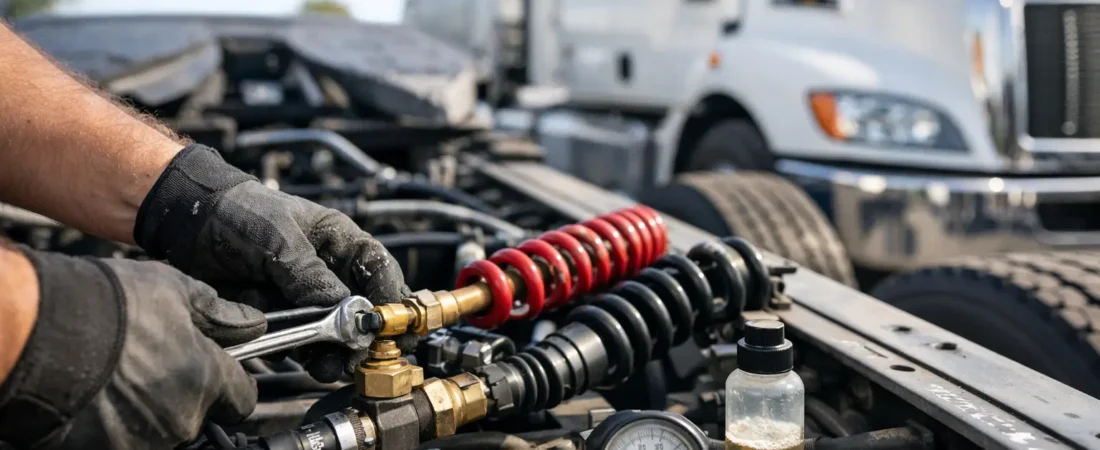
A truck that takes too long to build air, cycles its compressor constantly, or loses pressure while parked is not just creating an inconvenience at the yard. It may be heading toward a brake-related out-of-service issue, a missed delivery, or a disabled truck at a jobsite. Commercial truck air leak repair needs to address the source of the loss, not simply get pressure back long enough to move the unit.
For fleets, owner-operators, and mixer-truck operators, air-system problems can shut down a revenue-producing asset with very little warning. The right repair starts with confirming where air is escaping, understanding which circuit is affected, and checking whether the leak has damaged or masked another component failure.
Commercial Truck Air Leak Repair Starts With the Right Diagnosis
A heavy-duty air system supplies more than the service brakes. Depending on the truck and equipment, it can support the parking brake circuit, air suspension, cab controls, trailer connections, air-operated accessories, and specialized equipment functions. That is why a report of “low air” does not point to one automatic repair.
A technician should first observe how the truck builds and holds air. Slow pressure buildup may indicate a leak, but it can also point to a weak compressor, restricted air dryer, failing governor, damaged discharge line, or a problem with the unloader system. If the truck reaches normal pressure but loses it quickly with the engine off, a leak becomes more likely. The pressure gauges, warning buzzer, compressor cycling behavior, and condition of each reservoir all help narrow the problem.
The next step is isolating the circuit. A leak at a trailer gladhand, a cracked nylon line near the frame, and a leaking brake chamber may all sound similar from outside the truck, but the repair priority is different. Air escaping from a service brake component or spring brake circuit requires immediate attention. A small leak in an auxiliary circuit can still become a major problem if it forces the compressor to run continuously or prevents the system from recovering pressure between brake applications.
Soapy-water testing remains useful for confirming leaks at fittings, valves, hoses, and chambers. It works best after the system has been inspected strategically, not as a random search across the whole truck. On complex equipment, technicians may also isolate lines and circuits, monitor pressure loss, inspect control valves, and verify electronic fault information when the vehicle uses electronically controlled air functions.
Common Leak Points on Heavy-Duty Trucks
Air leaks often occur where movement, heat, vibration, and road exposure work against the system. Rubber hoses age and crack. Nylon air lines chafe against brackets or frame components. Push-to-connect fittings loosen, get contaminated, or lose their internal seals. Corrosion at air tanks and fittings can create a slow leak that becomes worse under operating pressure.
Brake chambers deserve close attention. A damaged diaphragm can release air through the chamber’s vent, sometimes only when the brake pedal is applied. Leaks at the chamber, slack adjuster area, or related brake hardware should never be treated as a minor maintenance item. The truck’s ability to apply and release brakes safely depends on those components working as designed.
Valves are another frequent source. The foot valve, relay valves, quick-release valves, leveling valves, tractor protection valve, parking brake valve, and air dryer can all leak internally or externally. An external leak may be easy to hear. An internal valve leak can be harder to identify because air may pass from one circuit to another, discharge through an exhaust port, or bleed down a reservoir without an obvious hiss at the original failure point.
Trailer connections create their own set of problems. Damaged gladhands, worn seals, split trailer supply lines, and leaks on the trailer itself can make a tractor appear to have an air-system failure. Before replacing tractor components, the technician needs to separate the tractor and trailer circuits and verify where the pressure loss occurs. That saves time and prevents unnecessary parts replacement.
Why a Small Air Leak Becomes an Expensive Breakdown
An air leak makes the compressor work harder and longer. Over time, that extra duty cycle can increase heat and moisture in the system, place more demand on the air dryer, and accelerate wear on the compressor and its related components. A truck may still leave the yard with a minor leak, but it may build air too slowly after repeated stops or lose enough pressure during loading to trigger warnings.
The risk is especially high on trucks that make frequent stops, operate in traffic, or work on construction sites. Mixer trucks and vocational equipment often run under demanding conditions, with vibration, dust, and extended idle time adding stress to hoses, fittings, and valves. A leak that seems manageable during a quick inspection can turn into a no-start-from-air-pressure situation, a brake release problem, or an out-of-service event before the day is over.
There is also a safety and compliance issue. Commercial vehicles must maintain proper air-brake operation. Ignoring a warning light, low-pressure alarm, or unusually long buildup time can put the driver, crew, and other motorists at risk. If a truck cannot hold or build the required air pressure, it should be evaluated before it returns to service.
Repairing the Cause Instead of Chasing the Symptom
A lasting repair depends on using the correct fitting, line type, valve, or brake component for the application. Cutting out a damaged section of air line and installing a temporary connector may be appropriate for an emergency recovery in some situations, but it is not always the right long-term solution. The line needs proper routing, support, and protection from rubbing, heat, and suspension travel.
The same applies to valves and brake components. Replacing a relay valve without checking the control line, delivery lines, and exhaust port can leave the original issue unresolved. Replacing an air dryer because the truck is slow to build pressure can be wasted work if the compressor is weak or a major leak exists downstream. Accurate diagnosis protects both repair time and operating budget.
After a repair, the system should be pressure-tested again. The truck needs to build air normally, hold pressure within acceptable limits, and operate through brake applications, parking brake release, and any affected auxiliary functions. A repair is not complete just because the hissing stopped. It has to restore dependable operation under the conditions the truck sees every day.
What Drivers and Dispatchers Should Report
Clear information helps a mobile technician get to the problem faster. Report whether the leak is heard with the engine running, with the brakes applied, after the parking brakes are set, or only when a trailer is connected. Note whether one gauge drops faster than the other, whether the low-air alarm activates, and whether the truck can build normal pressure at all.
If it is safe to do so, identify the general area of the noise – near a wheel end, under the cab, around the air dryer, at the rear frame, or near the trailer connections. Do not crawl under a truck with the suspension unsupported or attempt to service spring brake components without proper training and equipment. Those systems store significant force and require safe repair procedures.
For Houston-area fleets and operators, AP Diesel Diagnostics can bring heavy-duty air-system diagnostics and repair directly to the truck, whether it is at a yard, jobsite, or roadside location. Mobile service can avoid a tow and shorten the time between a pressure-loss report and a verified repair.
A truck that is slow to air up is telling you something before it becomes a full shutdown. Treat the first warning as a service call, verify the failure properly, and keep the repair focused on safe, reliable uptime.