A PTO failure rarely happens at a convenient time. It shows up when a mixer drum needs to turn, a dump body needs to raise, or hydraulic equipment has to work at the jobsite. A qualified truck PTO repair service finds out whether the problem is in the power take-off itself, the hydraulic circuit, the controls, or the truck systems supporting it – then repairs the actual cause so the unit can return to work.
For fleets, owner-operators, contractors, and concrete suppliers, PTO trouble is more than a mechanical issue. It can stop a scheduled delivery, leave equipment stranded at a site, create a safety concern, and put an otherwise operable truck out of service. Fast, on-site diagnosis matters because replacing parts without confirming the fault can extend downtime and add unnecessary cost.
What a Truck PTO Repair Service Should Diagnose
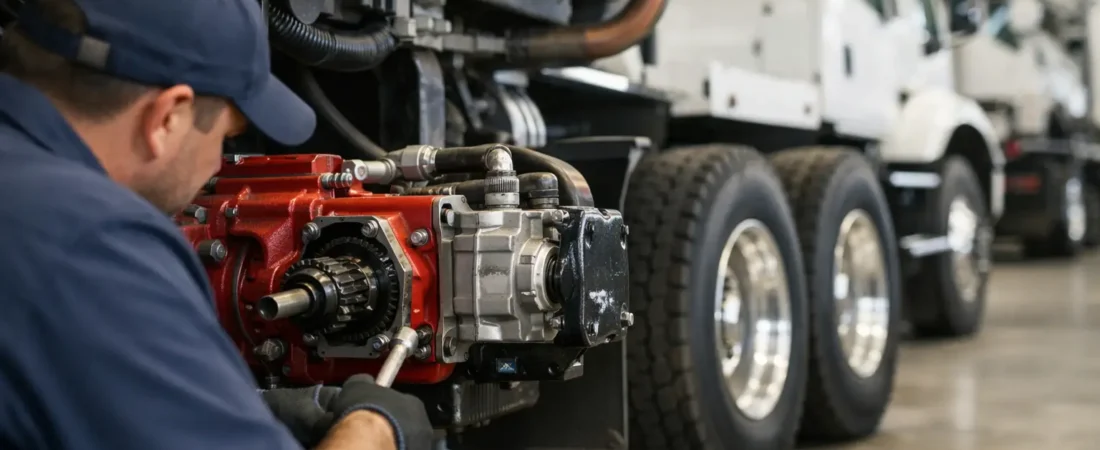
A PTO transfers engine or transmission power to auxiliary equipment. Depending on the truck, it may operate a hydraulic pump for a mixer drum, dump bed, winch, boom, vacuum system, or other work equipment. The assembly is compact, but reliable operation depends on several connected systems working together.
The PTO may be gear-driven through the transmission and engaged by air pressure, an electric solenoid, a cable, or an electronic control. Once engaged, it drives a hydraulic pump that supplies flow and pressure to the equipment. A no-function complaint can originate at any point in that chain.
A proper diagnosis checks PTO engagement, transmission-mounted components, mounting hardware, hydraulic pump operation, fluid condition, hoses, fittings, valves, cylinders, electrical controls, air supply, and safety interlocks. On late-model trucks, technicians may also need to inspect fault codes, body-builder circuits, PTO programming, battery voltage, grounds, and communication between modules.
That distinction is critical. A hydraulic function that will not operate does not automatically mean the pump has failed. Likewise, a PTO that will not engage may be prevented by low air pressure, a blown fuse, a failed switch, damaged wiring, a failed solenoid, or an interlock that is not receiving the correct park brake, neutral, clutch, or transmission signal.
Common PTO Failures That Stop Productive Work
Some PTO problems are immediate. The operator activates the switch and nothing happens. Others develop over time, starting with slow hydraulic response, unusual noise, fluid leaks, or intermittent engagement. Catching the warning signs early can prevent a smaller repair from becoming a damaged PTO, failed pump, contaminated hydraulic system, or transmission issue.
Common symptoms include:
- PTO will not engage or drops out during operation
- Hydraulic equipment operates slowly, weakly, or not at all
- Grinding, whining, rattling, or abnormal vibration occurs when engaged
- Hydraulic oil leaks at the pump, PTO, hoses, fittings, or seals
- PTO warning lights, body-control alerts, or electrical faults appear
Grinding or gear noise deserves immediate attention. It may point to improper gear mesh, a damaged gear, loose mounting bolts, internal PTO wear, or an engagement issue. Continuing to operate through that noise can damage components that may otherwise have been repairable.
Hydraulic leaks should be handled with the same urgency. A leak reduces fluid level, contaminates work areas, creates slip hazards, and can cause the pump to run hot or cavitate. On mixer trucks and other equipment-dependent vehicles, loss of hydraulic performance can quickly become a missed job or an unsafe unloading situation.
Why PTO Problems Can Be Misdiagnosed
PTO systems cross mechanical, hydraulic, pneumatic, and electrical lines. That is why a quick visual check or a single replacement part does not always solve the problem. The symptom may be simple, but the source may not be.
For example, a PTO that engages but does not produce usable hydraulic power could have a worn pump coupling, low reservoir level, restricted suction line, plugged filter, failed relief valve, internal pump wear, or a directional valve problem. The PTO itself may be turning correctly. Replacing it would not restore the function.
On the other hand, a PTO that does not engage can look like an electrical issue when the actual fault is low air pressure, a leaking air line, a sticking shift cylinder, or a mechanical engagement problem. Electronic controls add another layer. A weak battery, corroded ground, damaged harness, or incorrect interlock input can prevent a PTO from activating even when the mechanical components are in good condition.
Accurate testing saves time. A technician should verify the complaint, inspect the system safely, test control signals and air supply where applicable, check hydraulic pressure and flow when required, and inspect the mechanical drive before recommending repairs. That process reduces repeat breakdowns and helps protect the rest of the truck.
Mobile PTO Repair at the Truck or Jobsite
Towing a truck to a shop is not always the fastest path to recovery. A disabled mixer truck at a batch plant, a dump truck at a construction site, or a vocational truck staged for a morning route may need service where it sits. Mobile heavy-duty repair brings diagnostics and repair capability directly to the asset, often avoiding the added delay and expense of a tow.
On-site service is especially valuable when the truck can still be safely accessed but auxiliary equipment will not operate. The technician can inspect operating conditions, speak with the driver or equipment operator, and test the system in the environment where the failure occurred. That context often helps identify intermittent wiring faults, heat-related failures, hydraulic leaks, or operating issues that may be harder to reproduce later.
Not every repair can be completed roadside or at a jobsite. Severe internal transmission damage, major contamination, or repairs requiring specialized shop equipment may call for a controlled repair environment. But field diagnosis still has value. Knowing exactly what failed before arranging transport helps a fleet make better scheduling decisions and avoids sending a truck to a shop for an uncertain diagnosis.
For Houston-area operators, AP Diesel Diagnostics provides mobile troubleshooting for heavy-duty truck systems, including hydraulic, electrical, air-system, and specialized mixer-truck equipment faults. The objective is straightforward: identify the failure accurately, make the appropriate repair when conditions allow, and reduce the time a revenue-producing truck sits idle.
Repair Decisions: Fix the PTO or Address the Supporting System?
The right repair depends on what testing finds. A leaking gasket, failed switch, damaged connector, worn solenoid, loose mounting fastener, or compromised hose may be a focused repair. A PTO with damaged gears, failed bearings, extensive housing damage, or metal contamination may need replacement.
Hydraulic component decisions also require judgment. A pump that has lost pressure because of internal wear may need replacement, but a pump starved by a restricted suction hose or low fluid level can fail again if the underlying problem is not corrected. When contamination is present, the repair may need to include fluid service, filter replacement, hose inspection, and cleaning or repair of affected components.
Fleet operators should ask for the cause of the failure, not only the failed part. Knowing whether a component wore out normally, was damaged by contamination, suffered from poor mounting alignment, or failed due to an electrical or air-supply issue helps prevent the same truck from returning with the same complaint.
Preventing PTO Downtime Between Service Calls
Preventive checks are less expensive than a truck sitting with a loaded body, inactive mixer drum, or disabled hydraulic system. Drivers and maintenance teams do not need to disassemble PTO components, but they should pay attention to changes in operation.
Check hydraulic fluid at the proper interval and use the correct fluid specification. Look for wet fittings, hose abrasion, loose mounts, damaged wiring, and air leaks near PTO controls. Listen for changes in sound during engagement and operation. A PTO that begins engaging slowly, operates intermittently, or produces new vibration should be inspected before it becomes a no-start-for-the-equipment event.
Maintenance intervals depend on the truck’s workload. A unit that runs hydraulic equipment all day in concrete, construction, waste, or hauling service needs closer attention than a truck that uses its PTO occasionally. High heat, dirty operating conditions, long idle time, and frequent engagement cycles all affect service needs.
Operators should also follow the manufacturer’s engagement procedure. Engaging at incorrect engine speed, operating with low fluid, bypassing safety interlocks, or continuing after abnormal noise can shorten component life. Proper operation protects the PTO, pump, hydraulic system, transmission, and the people working around the equipment.
When Fast PTO Diagnosis Matters Most
A PTO issue becomes urgent when it affects safe movement, load handling, jobsite productivity, or a scheduled delivery. Do not keep cycling a PTO that is grinding, leaking heavily, overheating, or losing hydraulic control. Shut down the affected function, secure the vehicle and equipment, and have the system evaluated before further damage occurs.
The best time to arrange truck PTO repair service is when the first warning sign appears, not after the truck is committed to a load or a pour. A clear diagnosis at the truck can turn an uncertain breakdown into a repair plan that protects your schedule, your equipment, and your next job.